Friday, August 26, 2022

Lupine Publishers | Acute Infectious Cervical Lymphadenitis of Children in A Tropical Country


Abstract

Introduction: The volume increase of a cervical lymph node is frequent in infancy .It is most often secondary to a benign infection of the upper aerodigestive tracts [1,2]. It is a medical and surgical emergency frequently encountered in developing countries, despite the generalization of antibiotics. Its gravity depends on the virulence of the germ and the fragility of the patient.

Patients and Methods: It’s about a retrospectively study of all the medical files records of patients under 16 years old hospitalized at the ENT department of Fann Teaching Hospital for the management of infectious cervical lymphadenitis . The studied period is January 1st, 2008 to November 30th, 2017.

Results: We had collected 83 medical files of patients with acute infectious cervical lymphadenitis including 66 cases of suppurative acute lymphadenitis and 17 cases of simple acute adenitis (uncollected). The average age of our patients was 2.4 years with extremes ranging from 1 month to 16 month. The location of swelling was the submandibular region in 57 patients, upper jugular area in 8 patients and submental region in 6 patients. Stapphyloccocus aureus is the most frequent bacteria found in 29 cases. Initial antibiotic therapy consisted of the association of amoxicillin/clavulanic. A favorable evolution marked by an apyrexia after 48h of treatment with regression of the swelling and a resumption of the feeding was noted in 92% of the cases. We deplored two cases of death.

Conclusion: Acute adenitis is frequent in pediatric otorhinolaryngology. It is often secondary to oropharyngeal infections, dental and skin diseases. The treatment is essentially based on antibiotics.

Keywords:Acute lymphadenitis; pediatric infection; cervical lymph’s nodes

Read More About This Article Click on Below Link:
https://lupinepublishers.com/otolaryngology-journal/fulltext/acute-infectious-cervical-lymphadenitis-of-children-in-a-tropical-country.ID.000217.php

Read More About Lupine Publishers Google Scholar Articles:
https://scholar.google.com/citations?view_op=view_citation&hl=en&user=dMOUw-wAAAAJ&cstart=20&pagesize=80&citation_for_view=dMOUw-wAAAAJ:0ngZmJvimKcC


Friday, August 19, 2022

Olfactory Outcome After Endoscopic Sinus Surgery in Chronic Rhinosinusitis


Abstract

Background: Olfactory dysfunction is one of the major symptoms of CRS. Olfactory dysfunction affects the quality of life. Endoscopic sinus surgery is the surgical modality of treatment in cases of failed medial therapy. Assessment of olfaction in patients undergoing endoscopic sinus surgery is essential to know the impact on olfaction.

Objective: To assess the olfaction before and after Endoscopic sinus surgery.

Methods: This is a prospective study. Total 45 Patients were included in this study based on the inclusion and exclusion criteria. Diagnostic nasal endoscopy and CT scan were done preoperatively. Olfaction was assessed in all patients preoperatively, postoperatively at 1month and 3 months using olfactory testing tool.

Results: There were 45 patients of both gender 57.78% were females and 42.22% were males. The mean age of patients in our study was found to be 39.82±6.264 years. Most of these patients were in fourth decade of life. Of 45 patients 75% had symptoms of hyposmia/anosmia before surgery. Average Lund Mackey score for CT scan findings was found to be 13.42 ± 3.1. The patients were assessed postoperatively at 1st month and 3rd month using olfactory testing tool. The mean composite olfactory score was 5.83±2.89 preoperatively increased to 8.28± 2.33 at 1 month and 10.12 ±1.11 at 3 months, this difference was found to be statistically significant (p < 0.001). All patients mean olfactory scores improved postoperatively. The mean composite olfactory scores improved following endoscopic sinus surgery by 3.5 in Anosmic patients, 2.22 in Hyposmic patients and 1.04 in Normosmic at 1 month. Whereas at 3 months, 6.65, 3.22 and 1.95 in Anosmic, Hyposmic and Normosmic patients, respectively. The study was an attempt to assess the olfaction preoperatively and postoperatively in patients undergoing ESS.

Conclusion: The evaluation of olfaction in patients undergoing endoscopic sinus surgery showed improvement in olfactory outcome following the surgery in patients with CRS. 61% to 69% of CRS patients have a reduced sense of smell. Approximately two thirds of cases are due to the sinonasal disease. Olfactory dysfunction as result of sinonasal disease is unlikely to improve spontaneously without treatment.

Keywords: Olfaction; endoscopic sinus surgery; chronic rhino sinusitis

Abbreviations: CRS: Chronic Rhinosinusitis; ESS: Endoscopic Sinus Surgery; CCCRC: Connecticut Chemosensory Clinical Research Centre 

Read More About This Article Click on Below Link:
https://lupinepublishers.com/otolaryngology-journal/fulltext/olfactory-outcome-after-endoscopic-sinus-surgery-in-chronic-rhinosinusitis.ID.000216.php

Read More About Lupine Publishers Google Scholar Articles:
https://scholar.google.com/citations?view_op=view_citation&hl=en&user=dMOUw-wAAAAJ&cstart=20&pagesize=80&citation_for_view=dMOUw-wAAAAJ:MDX3w3dAD3YC


Friday, August 5, 2022

Ossiculoplasty Using Preserved Septal Cartilage


Abstract

Ossicular chain reconstruction is the primary method of restoring conductive hearing deficit seen in chronic middle ear disease. Many factors affect outcomes in this procedure including the middle ear environment, status of the Eustachian tube, surgical technique, type of prosthesis and status of residual ossicular remnants. Many materials have been used for Ossiculoplasty including both biologic and alloplastic materials, with varying degrees of success. This study was done to evaluate the efficacy of preserved septal cartilage as ossicular reconstruction prosthesis in patients with mucosal type of COM (chronic otitis media) with ossicular discontinuity.

Objective: To evaluate the efficacy of preserved septal cartilage as ossicular reconstruction prosthesis in patients with mucosal type of COM with ossicular discontinuity.

Materials and Methods: A prospective study of 20 patients with mucosal type of COM, undergoing Ossiculoplasty was conducted at a teaching tertiary care hospital from January 2019 to July 2020.

Results: A total 20 patients (13 males and 7 females) between the age group of 18-60 years with mucosal type of COM with ossicular discontinuity were included in the study. Out of 20 patients 18 patients (90%) had improvement in A-B gap (air bone gap) after surgery and 2 patients had no improvement in A-B gap after 3 months of follow up. The mean hearing gain was 12.25±7.23 dB which was statistically significant (p value 0.001).

Conclusion: Preserved septal cartilage is a good material for ossicular reconstruction in terms of postoperative hearing improvement and closure of A-B gap. By giving careful attention to the principles of ossicular construction and understanding basic principles and applying them in clinical practice, it is possible to give more desirable hearing results for the patients.

Keywords:Ossiculoplasty, septal cartilage

Abbreviations: COM: Chronic Otitis Media


Read More About This Article Click on Below Link:
https://lupinepublishers.com/otolaryngology-journal/fulltext/ossiculoplasty-using-preserved-septal-cartilage.ID.000215.php

Read More About Lupine Publishers Google Scholar Articles:
https://scholar.google.com/citations?view_op=view_citation&hl=en&user=dMOUw-wAAAAJ&cstart=20&pagesize=80&citation_for_view=dMOUw-wAAAAJ:4n0clTBhZ78C

Friday, July 29, 2022

Trazodone Not Only A Stabilizer in Allergic Rhinitis


Letter to Editor

We report the case of a 44 years old woman referred to the outpatient Sleep Disorder Service of the Neurological Clinic, Marche Polytechnic University for a symptomatology characterized by difficulty in maintaining sleep and a feeling of unrefreshing sleep on waking. On clinical history, she referred an allergic rhinitis, treated with short cycles of inalatory steroids and vasoconstrictors. At the moment of our observation, she did not assume any treatment [1]. Due to the reported symptoms, particular attention was paid to the possible presence of sleep disturbances, in particular sleep-related breathing disorders. In this respect, patient reported a morning dry mouth. Further, the partner referred an important snoring and continuous lightening of sleep. Nocturnal apnea events were not reported as well as discomfort or abnormal movements in the legs. No other disturbance suggestive for NREM or REM sleep disturbances, nor fewer specific phases were evidenced. Patient was then submitted to a polygraphy which showed a rhonchopathy associated with air flow limitations, a high arousal index and elevated heart rate variability. The exam excluded periodic limb movements (Figure 1) [2,3]. Considering the history of allergic rhinitis and also to evaluate the possible presence of anomalies of the upper airways, an ENT assessment was indicated. Further, in relation to the difficulty in maintaining sleep and for the high indices of autonomic dysfunction, a pharmacological treatment with trazodone at the dose of sleep stabilizer, 30 mg in the evening was prescribed.
ENT evaluation showed a pattern of nasal congestion without other alteration of the upper airways. Specific topical therapy was prescribed, not taken by the patient for the improvement with trazodone. Infact after few days of treatment with trazodone the patient reported a significant improvement of symptomatology and after 30 days a poligraphic control showed a complete recovery of respiratory alterations and a normalization of autonomic dysfunction (Figure 2) [4]. The particularly favorable and rapid evolution of patient’s symptomatology could be interpreted on the basis of the pharmacological properties of trazodone. It is possible to hypothesize that trazodone at low dosages, in addition to the anxiolytic and hypno-inducing effect, for its an antihistamine action was able to contemporary solve clinical pictures related to both insomnia and the respiratory dysfunction [5]. Therefore, trazodone, in addition to stabilizing the sleep structure by increasing the arousal threshold, should deserve consideration in patients affected by allergic rhinitis with sleep disturbances. The advantage of having a valid therapeutic alternative would be very important in relation to the fact that steroids and vasoconstrictors, normally used in the treatment of allergic rhinitis, find an indication only in the short-term approach and have no effect on sleep disturbances.

Keywords: Obstructive sleep apnea; flow limitation; allergic rhinitis; trazodone; polygraphy

Read More About This Article Click on Below Link:
https://lupinepublishers.com/otolaryngology-journal/abstracts/trazodone-not-only-a-stabilizer-in-allergic-rhinitis.ID.0000214.php

Read More About Lupine Publishers Google Scholar Articles:
https://scholar.google.com/citations?view_op=view_citation&hl=en&user=dMOUw-wAAAAJ&cstart=20&pagesize=80&citation_for_view=dMOUw-wAAAAJ:RfUwGJFMQ-0C

Monday, July 18, 2022

Excessive Fear/ Psychological Threat of Getting Covid-19 Infection in People Can Lead to Accidental Foreign Bodies in Nose During Screening and Sampling


Abstract

Background: Coronavirus disease 2019 (COVID-19) is an infectious disease caused by severe acute respiratory syndrome coronavirus 2 (SARS-CoV-2).The cases of Covid 19 are increasing daily since last 8 to 9 months due to which testing has also been increased and the incidence of accidental foreign body (swab stick) in the nose and mouth has also been seen during screening and sampling.

Case Report: This paper shows complication of viral swab testing during sampling of suspected irritable, anxious, and stressed Covid 19 patients as swab stick breaks at the indentation point while taking Nasopharyngeal and Oropharyngeal samples resulting in impaction in the nasal cavity or mouth.

Conclusion: This paper highlights various ideas to reduce the chances of accidental foreign body in the nasal cavity and mouth during sampling of suspected covid 19 patients.

Keywords: Covid-19; psychological threat; nasopharyngeal sampling; foreign bodies

Abbreviations: NP: Nasopharyngeal; OP: Oropharyngeal; FB: Foreign Body; ENT: Ear Nose Throat; PPE- Personal Protective Equipment’s 

Read More About This Article Click on Below Link:
https://lupinepublishers.com/otolaryngology-journal/abstracts/excessive-fear-psychological-threat-of-getting-covid-19-infection-in-people-can-lead-to-accidental-foreign-bodies.ID.000213.php

Read More About Lupine Publishers Google Scholar Articles:
https://scholar.google.com/citations?view_op=view_citation&hl=en&user=dMOUw-wAAAAJ&cstart=20&pagesize=80&citation_for_view=dMOUw-wAAAAJ:SpPTWFSNUtQC


Friday, March 25, 2022

Lupine Publishers | Otorhinolaryngological Manifestations in COVID-19 Patients

 Lupine Publishers | Journal of Otolaryngology


Abstract

Introduction: The World Health Organization confirmed COVID 19 as a pandemic on 11th March 2020. Though the most common symptoms of COVID-19 are fever, cough, myalgia, fatigue, and difficulty breathing, ear, nose, and throat (ENT) symptoms, including loss of sense of smell and/or loss of sense of taste have been reported as symptoms caused by the virus.

Aims and Objectives: To detect and discuss the different otorhinolaryngology (ORL) manifestations reported in COVID-19 positive patients.

Materialsand Methods: This observational study was done on 2000 patients with a positive COVID 19 test admitted to a tertiary care hospital. The patients were assessed for their signs and symptoms and the findings were analysed.

Results: The patients ranged in age from 18 to 70 years, including 1090 males (54.5%) and 910 females (45.5%). The most common presenting symptom was fever seen in 1500 (75%) patients. Other symptoms included cough in 1100 (55%) patients, expectoration seen in 446 (22.3%), breathlessness in 302(15.1%), nausea and vomiting in 80(4%) patients, fatigue/malaise in 568 (28.4%) patients.The most common otorhinolaryngological manifestation were sore throat seen in 460 (23%) patients, running nose in 292 (14.6%), olfactory disturbances in 180 (9%), nasal obstruction in 156(7.8%) , headache in 222(11.1%), pharyngeal congestion in 208(10.4%), tonsillar hypertrophy seen in 62(3.1%) patients.

Conclusion: Though, the most common presenting symptoms in COVID-19 patients are fever and cough, a significant proportion of patients does have ENT manifestations which may go unnoticed. Hence it becomes necessary to screen all COVID patients for ENT symptoms so that high quality care can be provided for patients.This also facilitates care givers to take necessary precautions to protect themselves.

Keywords: COVID 19;otorhinolaryngological; manifestations

Introduction

The Severe Acute Respiratory Syndrome Coronavirus 2 (SARSCoV- 2), firstly known as the 2019 novel Coronavirus (2019-nCoV), started in Wuhan in China in December 2019[1].The World Health Organization confirmed it as a pandemic on 11thMarch 2020[2]. Although this virus can cause severe respiratory failure and even death in infected patients, it has spread rapidly and continues to spread among people because it can cause mild or no symptoms in the majority of cases[3,4].The most common symptoms of COVID-19 are fever, cough, myalgia, fatigue, and difficulty breathing. In addition, ear, nose, and throat (ENT) symptoms, including loss of sense of smell and/or loss of sense of taste have been reported as symptoms caused by the virus.The aim of this study was to detect and discuss the different otorhinolaryngology (ORL) manifestations reported in COVID-19 positive patients.

Materials and Methods

All patients with confirmed reverse transcriptase polymerase chain reaction (RT-PCR)-positive testing for the SARS -CoV-2 viral genome were assessed for symptoms and signs. 2000 patients who presented to a tertiary care designated COVID hospital were included in the study. Health workers with confirmed positive PCR test results were voluntarily enrolled in the study. All subjects provided informed consent to participation in the study.

The inclusion criteria were

a) Patients>18 years of age with a positive COVID -19 test.
b) Patients having mild to moderate symptoms.

The exclusion criteria were

a) Age< 18 years old.
b) No confirmed positive PCR test result.
c) A history of chronic nasal problems.
d) Recent head injury, recent nasal surgery.
e) Severe respiratory failure or treatment in the intensive care unit.

Results

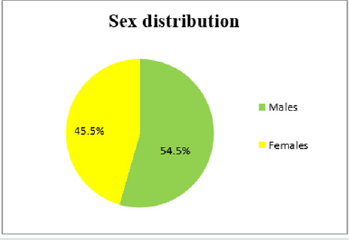
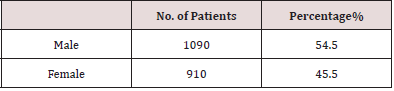
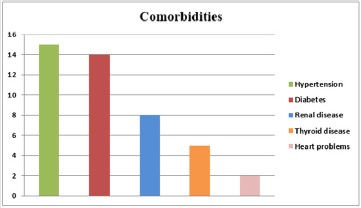
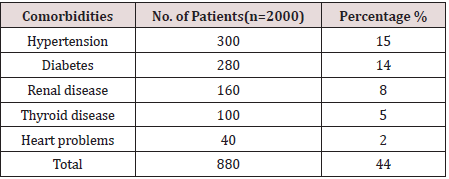
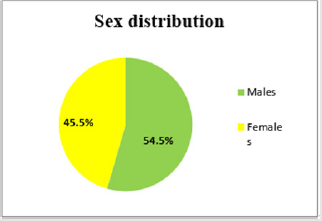
A total of 2000 patients were included in the study. The patients ranged in age from 18 to 70 years, including 1090 males (54.5%) and 910 females (45.5%)(Figure 1& Table 1).The most prevalent comorbidities in these patients were (Figure 2& Table 2).

Figure 1: Showing the sex distribution of patients.

Lupinepublishers-openaccess-otolaryngology-journal

Table 1: Showing the sex distribution of patients.

Lupinepublishers-openaccess-otolaryngology-journal

Figure 2: Showing various comorbidities seen in patients.

Lupinepublishers-openaccess-otolaryngology-journal

Table 2: Showing comorbidities seen in patients.

Lupinepublishers-openaccess-otolaryngology-journal

a) High blood pressure in 15%,
b) Diabetes in 14 %,
c) Renal disease in 8 %,
d) Thyroid diseases in 5%,
e) Heart problems in 2%.

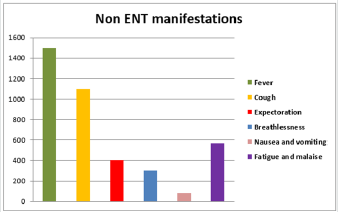
Figure 3: Showing various Non-ENT manifestations in patients

Lupinepublishers-openaccess-otolaryngology-journal

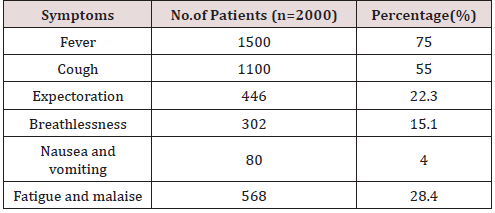
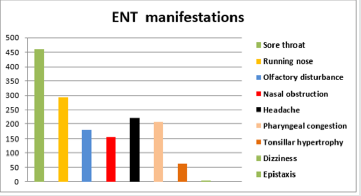
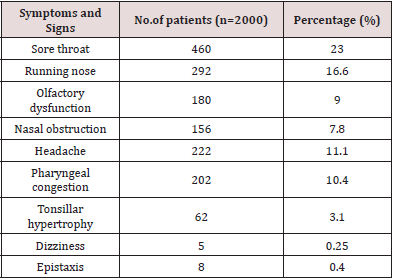
The most common presenting symptom was fever seen in 1500(75%) patients. Other symptoms included cough in 1100 (55%) patients, expectoration seen in 446 (22.3%), breathlessness in 302(15.1%), nausea and vomiting in 80(4%) patients, fatigue/ malaise in 568 (28.4%) patients (Figure 3& Table 3).Other rare symptoms were hemoptysis, chest pain, constipation and diarrhoea. The most common otorhinolaryngological manifestation was sore throat seen in 460 (23%) patients. Other manifestations include running nose in 292 (14.6%), olfactory disturbances in 180 (9%), nasal obstruction in 156(7.8%) patients, headache in 222(11.1%), pharyngeal congestion in 208(10.4%), tonsillar hypertrophy seen in 62(3.1%) patients. Dizziness was seen in 5(0.25%) patients. Epistaxis was seen in 8(0.4%) patients (Figure 4& Table 4).No patients reported facial edema or tenderness, diminution of hearing, hoarseness, or stridor.

Table 3: Showing non-ENT manifestations in patients.

Lupinepublishers-openaccess-otolaryngology-journal

Figure 4: Showing various ENT manifestations in patients.

Lupinepublishers-openaccess-otolaryngology-journal

Table 4: Showing non-ENT manifestations in patients.

Lupinepublishers-openaccess-otolaryngology-journal

Discussion

In December 2019, a novel coronavirus epidemic, caused by the severe acute respiratory syndrome coronavirus–2 (SARS-CoV-2) emerged from China[3]. The disease is widely distributed, making it an important pathogen with an unrestricted health threat [7]. The nasal, nasopharyngeal and/or the oropharyngeal tissue is one of the main harbor sites of the infection, main site of taking the sample for testing and a main source of transmission of infection. However, most published COVID-19 researches are focused on the lower respiratory tract manifestation and sequels due to their life-threatening nature.The literature that is available on ENT manifestation during COVID-19 infection is still sparse, thus, there is value in studying ENT manifestations of such a novel virus[8]. In our study, we have tried to collect the data concerning the ENT manifestations in the laboratory confirmed COVID-19 cases that were mild to moderately symptomatic.In the systematic review conducted by El Anwar M et al. they observed that fever (reported in 73.5% of the included patients), and cough (reported in 61%) are the dominant symptoms ofCOVID-19[8]. The findings of our study were similar with fever being seen in 75% of the patients and cough being seen in 55% of the patients. However, in the study by Salepci E et al, the most common general symptom was fatigue (71.3%) followed by cough (54.3%), and fever (50.7%)[9].

Lovato et al. criticizing the largest meta-analysis study on COVID-19 to date by Sun et al, suggested that true prevalence of sore throat was underestimated[10].In a followup systemic review, Lovato et al. reported that 12.4% of patients had sore throat[11]. In our study, 23% of the patients suffered from sore throat. In the study by Salepci et al, the prevalence of sore throat was 26%[9].In the review by El Anwar et al, the most common ENT manifestations for COVID-19 were sore throat (11.3%) and headache(10.7%).They concluded that their incidence is much less than the incidence of fever and cough in COVID-19 patients[8]. In the study conducted by Sakalli E et al.the most frequent ENT-related symptoms of the patients were nasal obstruction (53.5%), loss of sense of smell (51.2%), sore throat (50.2%), loss of sense of taste (47.1%), and rhinorrhea (38.5%) [12]. In our study the most common otorhinolaryngological manifestation was sore throat seen in 460 (23%) patients. Other manifestations include running nose in 292 (14.6%), nasal obstruction in 156(7.8%) patients, headache in 222(11.1%), pharyngeal congestion in 208(10.4%), tonsillar hypertrophy seen in 62(3.1%) patients. In the review by El Anwar M et al, no emergency ENT symptoms as bleeding per nose or throat or stridor were seen [8]. In our study, 8 patients presented with epistaxis, but there were no cases of stridor or upper airway obstruction.Varia et al.performed objective smell and taste tests were performed on 72 patients with positive PCR for COVID-19 and with no previous history of smell and taste dysfunction.They found that 73.6% of patients had smell or taste dysfunction during the course of the COVID-19 with 14.4% having isolated olfactory dysfunctions [13]. Sakalli Eet al, in their study concluded that loss of sense of smell/ taste is a common symptom in COVID-19 and may be the first and/or only symptom of this disease. In our study, 9% of the patients presented with olfactory disturbance.

In the study conducted by Salepci et al, out of 223 patients, only five patients stated that they had new onset complaints of dizziness and two that of hearing loss[9].They proposed that these complaints might not be related to COVID-19, but simply coincide with disease onset. Auditory manifestation was not reported in the studies on COVID-19 and auditory complication due to coronavirus is little mentioned in the literature[8].In our study, 5(0.25%) patients presented with dizziness, and no patients complained of hearing loss. Otorhinolaryngologic examinations produce aerosol, hence it is important to determine which patients are at higher risk of disease transmission and take the necessary precautions[14,15]. Salepci et al. observed that relying solely on fever measurement and questioning of patients only for general symptoms creates false confidence. They advocated that Otorhinolaryngologist should be alert not only for general symptoms but also for otorhinolaryngologic symptoms that could be associated with COVID-19. The absence of common symptoms must not be interpreted as the absence of the disease[9].

Conclusion

Though, the most common presenting symptoms in COVID-19 patients are fever and cough, a significant proportion of patients does have ENT manifestations which may go unnoticed. Hence it becomes necessary to screen all COVID patients for ENT symptoms so that high quality care can be provided for patients.This also facilitates care givers to take necessary precautions to protect themselves.

Read More Lupine Publishers Otolaryngology Journal Articles:
https://lupine-publishers-otolaryngology.blogspot.com/

Sunday, March 13, 2022

Lupine Publishers | Anosmia and Ageusia in Covid-19 Patients

 Lupine Publishers | Journal of Otolaryngology


Abstract

Introduction: The Severe Acute Respiratory Syndrome Coronavirus 2(SARS CoV2), started in Wuhan in China at December 2019.The symptoms mainly included fatigue, fever, dry and productive cough, shortness of breath, chest compression, myalgia, diarrhea, vomiting, anorexia, headache, sore throat, dizziness, palpitations, and, chest pain. Anosmia and/or ageusia may present as a symptom alone in cases of COVID-19. Hence it is necessary to test or quarantine patients with these complaints.

Aims and objectives: To determine the prevalence of anosmia and ageusia in patients with COVID-19 presenting to our tertiary care center.

Materials and Methods: All patients with confirmed real time polymerase chain reaction (RT-PCR) positive testing for the SARS -CoV-2 viral genome was assessed for symptoms and signs of olfactory and taste disturbance.Patients were asked to quantify their loss of sense of smell and taste, subjectively into mild, moderate and severe.

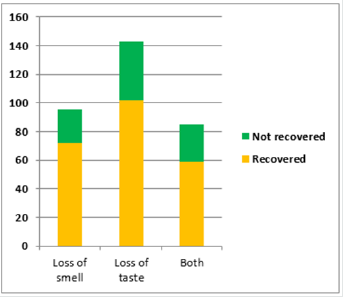
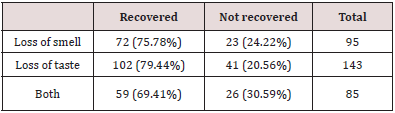
Results: Out of 2000 patients 95 patients (4.75%) had loss of sense of smell, and 143 patients (7.15%) had taste disturbance. 85 patients (4.25%) had both loss of smell and taste sensation. Out of 95 patients with loss of smell sensation, 25 patients (26.31%) had associated comorbidities, 32 patients (22.37%) out of the 143 with loss of taste sensation had comorbidities and 19(22.35%) patients out of the 110 patients with loss of both sensations had associated comorbidities.Out of 95 patients with loss of smell sensation, 72 (75.78%) patients recovered spontaneously. Out of 143 patients with loss of taste, 102 (79.44) patients recovered spontaneously. Among the patients with both symptoms, 59 (69.41%) recovered spontaneously.

Conclusion: Loss of smell and taste sensation is common, especially in COVID-19 disease with mild to moderate symptoms, and it can appear without any other general and ENT-related symptoms associated with COVID-19 disease or it may be the only symptom of COVID-19 disease. During the COVID-19 pandemic, screening tests performed in patients with loss of taste and smell sensation due to suspected COVID-19 disease will allow early diagnosis and treatment of patients.

Keywords: COVID-19; anosmia; ageusia; prevalence

Introduction

The Severe Acute Respiratory Syndrome Coronavirus 2(SARS CoV2) started in Wuhan in China in December 2019[1]. Since then, the new virus, also known as Coronavirus Disease 2019 (COVID-19), has spread dramatically all over the world crossing all borders till the World Health Organization (WHO) confirmed it as a pandemic disease on March 11, 2020 [2].At the initial times of COVID-19 disease, in China, the symptoms mainly included fatigue, fever, dry and productive cough, shortness of breath, chest compression, myalgia, diarrhea, vomiting, anorexia, headache, sore throat, dizziness, palpitations, and, chest pain[3,4].Since then, there has been an increase in studies from different parts of the world about the significant increase in the cases number presenting with loss of smell alone[5].The pathophysiology of loss of smell developing after infection with this virus has been suggested to be due to olfactory epithelial damage or due to spread to the central nervous system[6,7].The behavior of SARS-CoV-2 is different in different patients. This prevents suspicion of the disease clinically, delays diagnosis and isolation of patients infected with the virus, make it difficult to deal with the disease[8].Anosmia and/or ageusia may present as symptom alone in cases of COVID-19. Hence it is necessary to test or a quarantine patient with this complaint. The aim of our study was to determine the prevalence of anosmia and ageusia in patients with COVID-19 presenting to our tertiary care center.

Materials and Methods

All patients with confirmed reverse transcriptase polymerase chain reaction (RT-PCR )-positive testing for the SARS -CoV-2 viral genome were assessed for symptoms and signs of olfactory and taste disturbance. 2000 patients who presented to our tertiary care designated COVID hospital were included in the study. Health workers with confirmed positive PCR test results were voluntarily enrolled in the study. All subjects provided informed consent to participate in the study. Patients were asked to quantify their loss of sense of smell and taste, subjectively into mild, moderate, and severe.

The inclusion criteria were

a) Patients >18 years of age with a positive COVID -19 test.
b) Patients having mild to moderate symptoms.

The exclusion criteria were

a) Age < 18 years old,
b) No confirmed positive PCR test result
c) A history of chronic nasal problems
d) Recent head injury, recent nasal or ear surgery
e) Severe respiratory failure or treatment in the intensive care unit.

Results

Figure 1: Showing the sex distribution of patients.
Lupinepublishers-openaccess-otolaryngology-journal

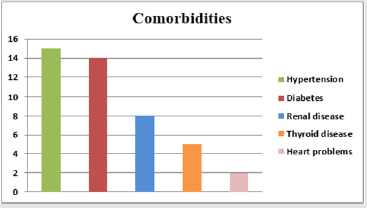
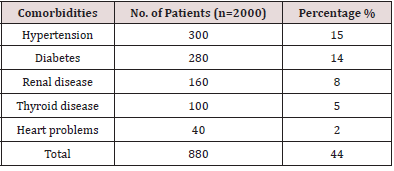
A total of 2000 patients were included in the study. The patients ranged in age from 18 to 70 years, including 1090 males (54.5%) and 910 females (45.5%) (Figure 1& Table 1).The most prevalent comorbidities in these patients were (Figure 2& Table 2).

Figure 2: Showing various comorbidities seen in patients.
Lupinepublishers-openaccess-otolaryngology-journal

Table 1: Showing the sex distribution of patients.

Lupinepublishers-openaccess-otolaryngology-journal

Table 2: Showing comorbidities seen in patients.
Lupinepublishers-openaccess-otolaryngology-journal

a) High blood pressure in 15%,
b) Diabetes in 14 %,
c) Renal disease in 8 %,
d) Thyroid diseases in 5%,
e) Heart problems in 2%.
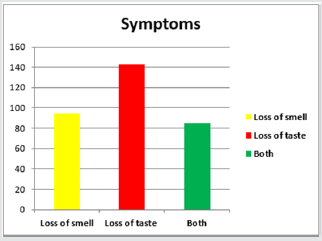
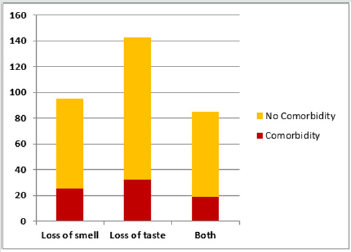
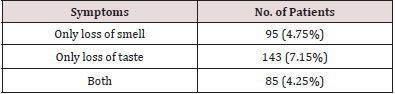
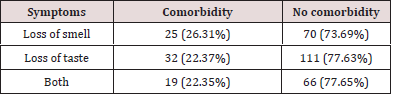
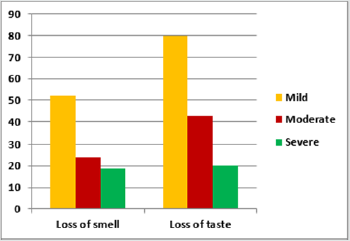
Out of 2000 patients 95 patients (4.75%) had loss of sense of smell, and 143 patients (7.15%) had taste disturbance. 85 patients (4.25%) had both loss of smell and taste sensation(Figure 3 &Table 3). Out of 95 patients with loss of smell sensation, 25 patients (26.31%) had associated comorbidities, 32 patients (22.37%) out of the 143 with loss of taste sensation had comorbidities and 19 (22.35%) patients out of the 110 patients with loss of both sensations had associated comorbidities. It can be observed that most patients with olfactory and taste disturbances did not have comorbidities (Figure 4& Table 4).Out of 95 patients with loss of smell sensation, 52 patients (54.73%) had mild loss, 24 (25.27%) patients had moderate loss and 19(20%) patients had severe loss. Out of 143 patients with loss of taste, 80 (55.94%) patients had mild loss, 43 (30.06%) patients had moderate loss and 20 (13.98%) patients had severe loss(Figure 5& Table 5).Patients were followed up for 15 days for improvement of symptoms. Out of 95 patients with loss of smell sensation, 72 (75.78%) patients recovered spontaneously. Out of 143 patients with loss of taste, 102 (79.44%) patients recovered spontaneously. Among the patients with both symptoms, 59 (69.41%) recovered spontaneously(Figure 6& Table 6).

Figure 3: Showing patients with olfactory and taste disturbances.
Lupinepublishers-openaccess-otolaryngology-journal

Figure 4: Showing symptoms in patients with comorbidity.
Lupinepublishers-openaccess-otolaryngology-journal

Table 3: Showing patients with symptoms.
Lupinepublishers-openaccess-otolaryngology-journal

Table 4: Showing symptoms in patients with comorbidity.
Lupinepublishers-openaccess-otolaryngology-journal

Figure 5: Showing severity of symptoms in patients.
Lupinepublishers-openaccess-otolaryngology-journal

Table 5: Showing severity of symptoms in patients.

Lupinepublishers-openaccess-otolaryngology-journal

Figure 6: Showing patients who spontaneously recovered after 15 days.
Lupinepublishers-openaccess-otolaryngology-journal

Table 6: Showing patients who spontaneously recovered after 15 days.
Lupinepublishers-openaccess-otolaryngology-journal

Discussion

In December 2019, an epidemic,caused by the severe acute respiratory syndrome coronavirus 2, emerged from China [9]. COVID-19 can manifest with a wide clinical spectrum that ranges from no symptoms to septic shock and multi-organs dysfunction[10].Chemosensory dysfunctions are known to be common problems during the COVID-19 pandemic [5]. In a study conducted by Qiu et al, smell and taste abnormalities were the first and the only complaints in 10% of the subjects, and 25% of the children had only smell and taste abnormalities at the time of the presentation [11]. Therefore, these disorders can be considered as early indicators of COVID-19 disease and is necessary for screening and control of infection. In our study, we have investigated the frequency and severity of olfactory and taste related symptoms in patients with confirmed COVID-19 disease, the association with coexisting comorbidities,and the recovery process of the smell and taste disturbances.The first report that included loss of smell and taste sensation caused by SARS-CoV-2 was of a study conducted by Mao et al. which emphasized the neurological symptoms of the disease. They stated that approximately 6% of patients infected with SARS-CoV-2 had loss of sense of smell and that loss of sense of smell may be the first symptom before onset of other neurological symptoms [12]. In the study conducted by Al-Ani R et al, the prevalence rates of ageusia and anosmia, ageusia, and anosmia were 8.51%, 11.35%, and 4.96%, respectively [5]. Paderno et al. in their study observed that the olfactory and gustatory dysfunctions were seen in 83% and 89% of patients, respectively. Tong et al. [14] in a systematic review and meta-analysis study [13], observed that the prevalence rate of the 10 investigations which analyzed the olfactory dysfunction in patients with COVID-19 disease was 52.73%, whereas nine investigations reported that the prevalence rate of the gustatory dysfunction was 43.93%.Al-Ani R et al. [15] postulated that this variability among various studies might be attributed to the variation in the ethnicity, sample size, and type of the sample[5].In our study, out of 2000 patients 95 patients (4.75%) had loss of sense of smell, and 143 patients (7.15%) had taste disturbance. 85 patients (4.25%) had both loss of smell and taste sensation.
In a study conducted by Kaye R et al [15], utilizing the COVID-19 Anosmia Reporting Tool developed by the American Academy of Otolaryngology-Head and Neck Surgery for clinicians indicated that 73% of 237 patients had loss of sense of smell at admission to hospital, and 26.6% of these patients had loss of sense of smell as the main complaint at the time of admission to hospital. They reported that 85% of the patients who described loss of sense of smell recovered within the first 10 days, and the average recovery time was 7.2 days.Lechien JR et al. [16] reported that 67.8% of their patients with loss of sense of smell and 78.9% of patients with loss of sense of taste recovered to various degrees within an average of 8 days [16]. In our study, patients were followed up for 15 days for improvement of symptoms. We found that 75.78%patients with loss of smell sensation, 79.44% with loss of taste sensation and 69.4% of patients with both symptoms recovered at 15 days. In a study conducted by Sakalli E et al, out of 172 patients, 88 patients were reported to have loss of sense of smell related to SARS-CoV-2 infection. Among them, loss of sense of smell was mild in one (1.2%) patient, moderate in 24 (14%), and severe in 62 (36.0%) patients[17]. We found that out of 95 patients with loss of smell sensation, 52 patients (54.73%) had mild loss, 24 (25.27%) patients had moderate loss and 19(20%) patients had severe loss. Out of 143 patients with loss of taste, 80 (55.94%) patients had mild loss, 43 (30.06%) patients had moderate loss and 20 (13.98%) patients had severe loss. It was also observed in our study that most patients with olfactory and taste disturbances did not have any associated comorbidities.There are no proven mechanisms for the loss of smell and taste sensation.There is no prior investigation that studied the possible association between coronavirus and the appearance of taste alteration. Zhou et al. [18] have been confirmed that COVID-19 uses the cellular angiotensin-converting enzyme 2[18].It is possible that the COVID-19 causes taste dysfunction similar to that caused by the ACE2 inhibitors[19]. Though the mechanisms for the smell and taste loss in COVID-19 disease are unclear, we observed that SARS-CoV-2 does cause loss of smell and taste sensation in infected patients, and that majority of patients recover spontaneously.The limitations of our study include the following:

a) Subjective assessment was done, and objective diagnostic tests were not used to evaluate the severity and frequency of the STL symptoms and improvement of STL.
b) We did not include patients with severe symptoms and those treated in the intensive care unit. Therefore, our study population might not be representative of all patients with COVID-19 disease.
c) Patients were followed up for 15 days for assessment of recovery of smell and taste sensation, therefore we do not have long term follow-up results for patients who did not recover within 15 days.

Conclusion

Loss of smell and taste sensation is common, especially in COVID-19 disease with mild to moderate symptoms, and it can appear without any other general and ENT-related symptoms associated with COVID-19 disease or it may be the only symptom of COVID-19 disease. During the COVID-19 pandemic, screening tests performed in patients with loss of taste and smell sensation due to suspected COVID-19 disease will allow early diagnosis and treatment of patients.

Read More Lupine Publishers Otolaryngology Journal Articles:
https://lupine-publishers-otolaryngology.blogspot.com/


Choanal Atresia Repair, A Comparison Between Transnasal Puncture With Dilatation And Stentless Endoscopic Transnasal Drilling

  Abstract Background: in this study we present the outcome of surgical repair of choanal atresia of 33 patients underwent t...